For years, we’ve been told that Pakistan Occupied Kashmir is just barren land with no resources and not worth reclaiming. This idea has been repeated so often that many Indians have come to believe it. Today, I aim to challenge that narrative by presenting insights from publicly available data.
Maharaja Hari Singh, the ruler of Jammu & Kashmir, initially sought to remain independent and not align with either India or Pakistan, as permitted under the Indian Independence Act passed by the British Parliament on July 5, 1947. However, following the tribal invasions orchestrated by Pakistan into Jammu and Kashmir, the Maharaja decided to sign the Instrument of Accession to India to seek assistance in repelling the attack. Thus, legally, Pakistan-occupied Kashmir (POK) is an integral part of India, not Pakistan.
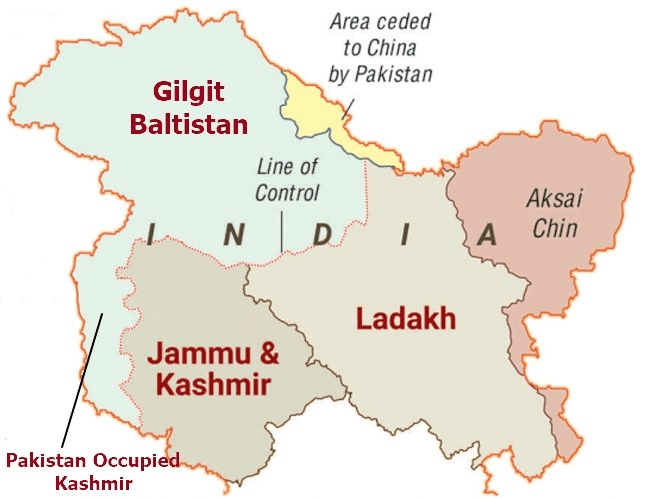
Pakistan took control of Gilgit-Baltistan, Shaksgam Valley (later ceded to China), and parts of Jammu & Kashmir after the partition. Instead of taking immediate military action to reclaim these areas, Prime Minister Nehru chose to approach the United Nations, following the advice of Lord Mountbatten, the last British Viceroy of India. This decision, however, has been a subject of significant debate, as Kashmir is considered an integral part of India. Many, including Sardar Patel, who played a key role in integrating 562 princely states into India, and used diplomacy, military intervention and plebiscites to integrate Hyderabad and Junagadh, believed that a different approach might have led to a different outcome in Jammu and Kashmir.
Geographical and Strategic importance
Jammu and Kashmir’s importance goes beyond its regions of Jammu, Kashmir, or Ladakh; it lies in the geopolitical significance of Gilgit-Baltistan. This area connects Afghanistan, Tibet (occupied by China), and is close to Tajikistan. Historically part of the ancient Silk Route, Gilgit-Baltistan holds great potential for trade with Central Asia, Europe, and Eurasia. For India, controlling this region is vital for strategic security, as historically, many invasions into India—by the Turks, Afghans, Mughals, and others—came through this area. Additionally, India needs Gilgit-Baltistan to counter China’s growing influence, as China is heavily invested in the China-Pakistan Economic Corridor (CPEC), which passes through this region and connects to Gwadar Port. In the event of a conflict with China, India currently has the strategic advantage to block Chinese trade through the Strait of Malacca, disrupting its maritime routes. However, if India gains control over Gilgit-Baltistan, it would provide a dual strategic advantage – not only securing the ability to block China’s sea routes, but also cutting off China’s land-based trade routes as well. This would significantly enhance India’s power to counter China on both fronts.
Abundance of Natural Resources, Minerals & Fresh water Reserves
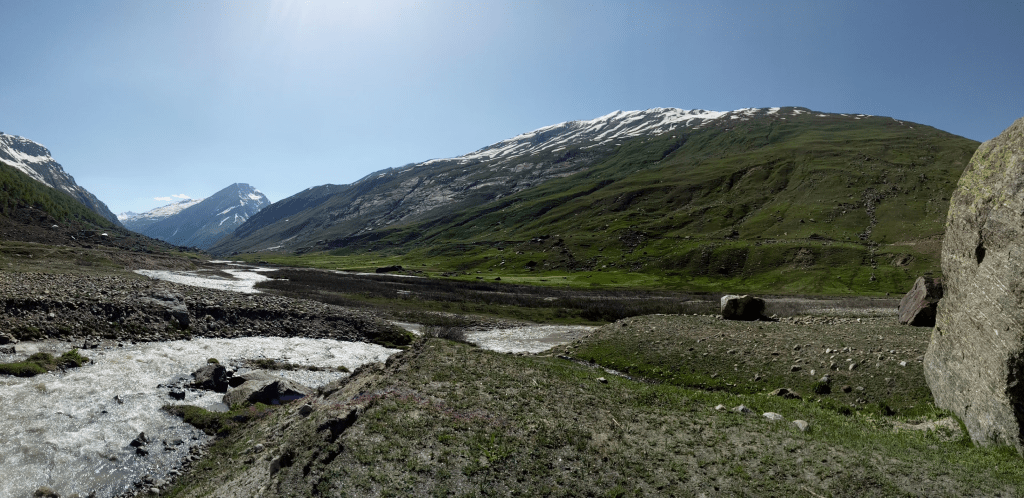
Gilgit-Baltistan is rich in natural resources such as gold, uranium, copper, lead, zinc, and gemstones. It also holds significant potential for hydropower generation, geothermal energy, and crucial freshwater reserves. As global water scarcity becomes an increasing concern, conflicts over freshwater resources may intensify in the future. This highlights the strategic importance of controlling these vital resources, which makes a case for India to assert control over Pakistan-occupied Kashmir (POK) to secure its freshwater for the long term.
Here is a report from the Geological Survey of Pakistan detailing the resource potential of Gilgit-Baltistan & Pakistan Occupied Kashmir:
Geological Survey of Pakistan Report.
Historical and Cultural Significance
According to the Vishnu Purana, Jammu & Kashmir is described as a part of Ancient Bharatvarsha, which refers to the land that lies to the north of the ocean and south of the Himalayas.
“उत्तरं यत्समुद्रस्य हिमाद्रेश्चैव दक्षिणम्।
वर्षं तद् भारतं नाम भारती यत्र सन्ततिः।”
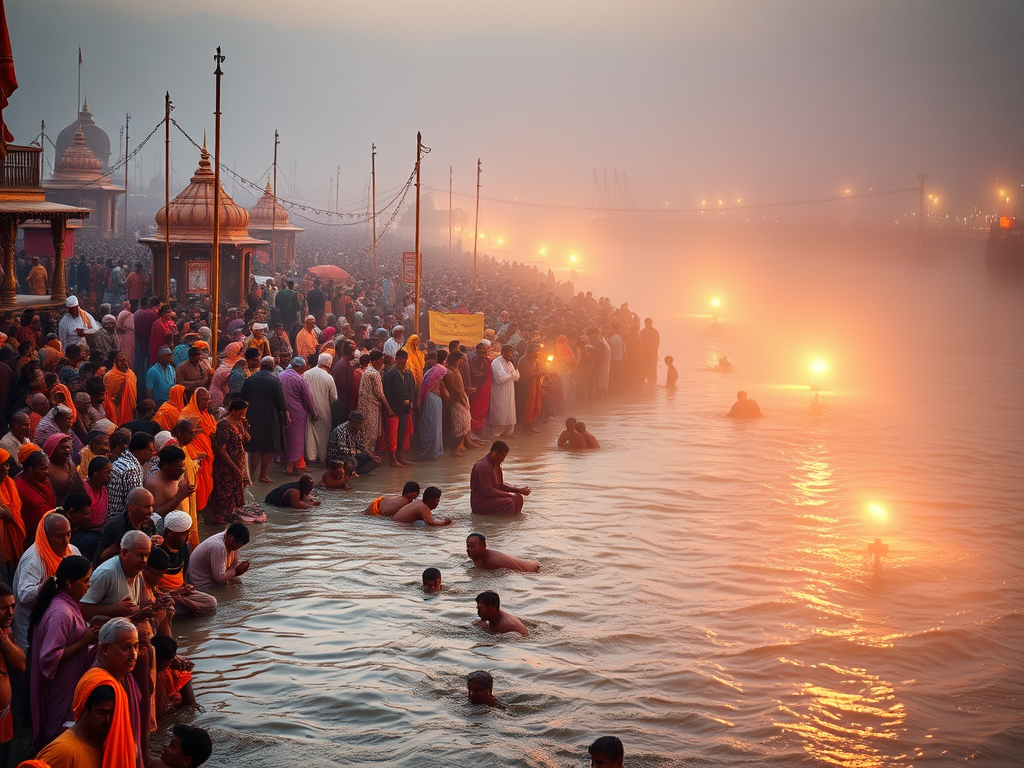
The term Hindu is derived from the ancient name Sindhu, which referred to the Indus River. The Persian and Greek civilizations used the term Hindu to describe the people living on the other side of the Indus River. Over time, this term came to be associated with the cultural and spiritual practices of the Indian subcontinent. However, the religious identity of Hinduism as it is understood today developed much later, primarily in the context of the diverse practices and philosophies that emerged in India over centuries. Originally, “Hindu” was more of a geographical and cultural term, not strictly religious.The Indus River, which flows through Gilgit-Baltistan, has been historically significant to the cultures of the broader Indian subcontinent. People living along the Indus, including those in what is now Pakistan, were part of the larger Bharatiya (Indian) civilization. However, over time, the region saw a blend of various cultures and religious influences, including Buddhism, Hinduism, and later Islam. Therefore, the Indus River is geographically and culturally important to Bharat (India).
Sharda Peeth, located near Neelum Valley, is considered a sacred site dedicated to Goddess Saraswati and is an important pilgrimage destination in Hinduism. It is believed to be the place where Adi Shankaracharya developed the concept of Advaita Vedanta, which teaches that the soul (Atman) and the supreme consciousness (Brahman) are one and the same. Historically and culturally, Sharda Peeth was a renowned center for scholars from around the world, offering a space for the study of philosophy, mathematics, spirituality, and intellectual debates, including those between Buddhist scholars and Adi Shankaracharya.
Reclaiming Pakistan Occupied Kashmir
India cannot resort to war at this moment, as Prime Minister Modi has emphasized that “this is not the era of war.” Additionally, any attempt to take back Pok militarily could risk portraying India as an aggressor on the global stage, similar to how Russia is viewed. Bilateral talks are also unlikely to succeed, given that Pakistan is not a true democracy but is controlled by its army, with a puppet government.
Shaping the Narrative
The region of Pakistan-Occupied Kashmir (POK) is legally an integral part of India, but global narratives often fail to reflect the actual situation. Western Media outlets such as BBC, Al Jazeera, and The New York Times often misinterpret the issue, portraying terrorists as “freedom fighters” without fully understanding the complex dynamics of terrorism in Jammu and Kashmir. These narratives tend to ignore the presence of Islamist terrorist organizations supported by Pakistan, which have been destabilizing the region for decades. Locals, often influenced by this ideology, have been misled, leading to a lack of development in the region and prolonged suffering.
In particular, the Kashmir Files (Movie,2022), which sheds light on the 1990 genocide of Kashmiri Pandits, was labeled as propaganda by western influenced media, even though it portrays the brutal truth about the ethnic cleansing and the human rights violations that occurred, arguably equivalent to the persecution of Jews during the Holocaust. This tragic history is often downplayed or outright called false by the western media.
To counter these skewed perceptions, India needs to leverage its Indian diaspora and take a more proactive role in shaping global narratives. This can be achieved by creating compelling biopics, documentaries, and movies that highlight the genocide, the Kashmir issue, and the identity of the people of Jammu and Kashmir. India should also focus on gaining global support by using strategic media channels, much like how China, & western countries who often shape narratives through media control. India needs to take a similar approach, using both soft power and media influence to crack the prevailing anti-India propaganda and win the narrative war by presenting the true story of Kashmir to the world.
Moreover, it is essential to develop Jammu and Kashmir economically, ensuring its integration into the broader development narrative of India. Creating a global sympathy wave by controlling the narrative and developing the region can help shift international perspectives, build stronger support for India’s position, and counter the misleading portrayal of the situation.
Provide Opportunities to Natives of POK
To integrate Pakistan-Occupied Kashmir (POK) and Gilgit-Baltistan back into India, India should take a multifaceted approach. The first step would be to offer Aadhaar cards to residents of Gilgit-Baltistan and POK, enabling them to connect with India seamlessly. This would also facilitate visa-free travel for them within India, fostering economic and cultural ties. By using the Aadhaar enrollment process, India can collect accurate demographic data, which will help prevent Pakistan from manipulating the region’s population and ensure a proper identification system for residents.
This would allow POK residents to apply for government services, access Indian healthcare under schemes like Ayushman Bharat, avail free vaccines, and benefit from the Indian education system, including admission to IIMs, IITs, and other government-funded institutions.
Leveraging soft power to promote democratic values and foster pro-peace, collaborative relations between India and Pakistan.
Strategically, it is essential to acknowledge that bilateral talks with Pakistan will not yield results under its current radicalized regime which is controlled by the Army. Instead, India should focus on influencing Pakistan’s key institutions—including its judiciary, military, media & government – to support democratic reforms and work toward a regime change. Such changes could create a more cooperative environment, paving the way for the peaceful integration of Pakistan-occupied Kashmir into India.
India must recognize that Pakistan’s economic and social growth is intrinsically tied to India’s progress. India is an emerging superpower in South Asia, guided by the philosophy of Vasudhaiva Kutumbakam (the world is one family), India can strengthen its geo-political influence and create avenues for aligning Pakistan’s growth with its own strategic interests. This economic interdependence can be leveraged to promote stability in the region, benefiting both nations. Moreover, India should build trust with Pakistan’s people, focusing on empowering liberal intellectuals and leaders who value democratic ideals and understand the shared cultural heritage rooted in the Indus Valley Civilization. These efforts would help counter the forced narratives that have fostered hatred and violence over the decades.
India should also advocate for the establishment of a secular democratic pro-India government in Pakistan that operates on principles of Secularism, Peace, Justice and Sustainability. This government should prioritize banning extremist elements and ensuring that no space is left for terrorist organizations or pro-Islamist radicals in India to thrive. As part of this strategy, India should collaborate with Pakistan to establish multiple peace programs to counter extremist ideologies and ensure lasting peace.
To address extremism, India must prioritize eliminating radical ideologies at their root. Madrassa education that promotes extremist ideologies should be replaced with modern, secular schooling, promoting values aligned with peace and cooperation. Re-educating and de-radicalizing Pakistani society will help foster a future generation more receptive to collaboration with India. Additionally, pro-extremist ideologies and literature must be banned to ensure a more inclusive and progressive society in Pakistan.
Once these foundational changes are achieved, India and Pakistan can engage in meaningful bilateral talks and negotiations. This comprehensive approach would create the conditions necessary for India to reclaim Gilgit-Baltistan without conflict, ultimately fostering stability and mutual prosperity in the region under the ethos of Vasudhaiva Kutumbakam—the world as one family.
By integrating POK and Gilgit-Baltistan into India, strengthening economic ties, and addressing radicalization and terrorism , India can assert its rightful claim to the region while ensuring lasting peace and prosperity for both India and Pakistan.
Disclaimer
The views and opinions expressed in this article are based on publicly available information. I am a proud Bhartiya who envisions Bharat as a superpower by 2047. My goal is to present facts and honest opinions derived from the data in the public domain. While I strive for accuracy, this article reflects my personal interpretations and understanding.
References
https://iasbaba.com/2020/09/gilgit-baltistan-to-become-a-pakistani-province-map-based/
https://unsplash.com/photos/a-mountain-valley-with-a-river-running-through-it-UrpqzNWH3ow


 Indus Diplomacy
Leave a comment