
In the era of globalization, where economies and cultures are deeply interconnected and information is easily accessible, India’s Vedic philosophy of Vasudhaiva Kutumbakam meaning ‘The world is one family’ – has the potential to serve as a powerful soft power strategy.
Before exploring India’s current soft power strategy and its path forward, it is essential to examine the soft power strategies employed by global powers such as the United States, China, and Western European Countries. Understanding how these nations have leveraged their cultural, economic, and political influence can provide valuable insights into crafting an effective approach for India.
The Limitations of Hard Power
Historically no country has been able to develop enough hard power, meaning military strength and economic resources to maintain its global dominance for an extended period of time. Hard power has certain limitations, as it requires military intervention and the depletion of economic resources, making it unsustainable in the long term. The world has witnessed the devastating consequences of two world wars, which claimed countless lives and led to the development of nuclear weapons capable of annihilating humanity itself.
The U.S. Transition to Soft Power
After the Cold War ended in 1991, the United States emerged as the sole superpower, marking the conclusion of the bipolar world order dominated by the U.S. and the Soviet Union. Recognizing the limitations of hard power – relying solely on military and economic might – the U.S. pivoted toward ‘soft power’ a concept defined by American political scientist Joseph Nye as the ability to influence others to act in your favor through attraction rather than coercion meaning force, threats, or pressure. This approach became central to sustaining its global influence.
The United States soft power strategy emphasized promoting liberal democratic governance, free-market economics, human rights, and cultural ideals to extend its ideological and cultural influence globally. To support this strategy, the U.S. played a pivotal role in establishing international institutions such as the International Monetary Fund (IMF), the World Bank, and the World Trade Organization (WTO), which reinforced the rules and norms aligned with its vision of a liberal international order.
America’s liberal democracy, along with its values of voting rights, free speech, and individual freedoms, was highly attractive, leading many nations to aspire to follow the American model. The United States’ soft power strategy emphasized that Europe’s economic growth and regional security were closely tied to the strength and military might of the U.S. NATO, formed with member states from across the globe, saw countries, even those with differing ideologies such as Turkey, giving up a degree of sovereignty to join. The appeal of American capitalist society, seen as a model for generating wealth and opportunity, was fueled by the allure of free speech, voting rights, and consumer culture—symbolized by brands like Levi’s jeans, Starbucks coffee, McDonald’s burgers, and Apple products.
America’s “democracy promotion” strategy has often seemed more like a magic trick. Initially, it was believed that encouraging countries to adopt liberal democratic systems would lead them to prosperity. But instead, we saw the rise of crony capitalism, increasing debt, income inequality, and unstable growth, making global economies more dependent on the U.S. than ever.
Although the West promoted democracy and ‘freedom,’ many Eastern European nations that experienced ‘color revolutions’ faced unstable governments or returned to authoritarianism.
Now, with social media and alternative narratives everywhere, it’s becoming clear: the “freedom” pushed by the West might be more of an illusion. What many thought was a push for democracy often looked more like a strategy to keep emerging countries from challenging Western dominance. Institutions like the IMF, World Bank, and WTO? Well, they’ve been accused of keeping the status quo, favoring Western power instead of helping the developing world.
Western countries’ promotion of “liberal democracy” led to chaos. Syria’s move toward democracy turned into a civil war, and in Iraq, the U.S. used soft power to justify the invasion, but the true goal was securing oil, not spreading freedom.
Take Africa – full of oil, gold, gas, and other resources – but still struggling with poverty and hunger. The liberal democracy model didn’t magically fix the problems. Instead, it often created instability, with the promised prosperity nowhere in sight.
This has led to criticisms that democracy promotion by Western powers is sometimes aligned with strategic economic interests, such as securing access to natural resources.
In Bangladesh, a recent shift in the political landscape raises questions about the role of Western influence. The country’s democratic government was overthrown through protests and unrest, which many believe were orchestrated with external support. The current regime, led by Muhammad Yunus, has been accused of persecuting religious minorities, particularly Hindus and Christians, yet international media coverage of these violations remains limited. Some analysts argue that this change in Bangladesh’s leadership could be a strategic move by the U.S. to counter China’s growing influence in the region and secure a foothold near India.

So, next time you hear “America’s bringing democracy,” just check the map. If there’s oil or gold nearby, you might just hear the sound of planes landing! ✈️💰
China’s Soft Power Strategy
China now has the second-largest population in the world and the second-largest economy, with a nominal GDP of $18.27 trillion. It is also the largest economy by purchasing power parity (PPP). China’s soft power strategy was prominently developed under Hu Jintao, the General Secretary of the Chinese Communist Party (CCP) from 2002 to 2012 and President of China from 2003 to 2013. This strategy was based on the concept of China’s “peaceful rise,” now referred to as “peaceful development,” which sought to assure the world that China’s growing military, political, and economic power would not threaten the existing international order led by the United States.
China remains unique as the only major global power without democratic institutions, governed by a single-party Communist regime without voting rights, free speech for its citizens. Despite this, China successfully lifted millions out of poverty, a feat that challenged the Western belief that economic growth naturally leads to liberalism and democracy. Instead of adopting democratic values, China focused on building its hard power alongside its growing economy, challenging the U.S.-led global order.
China’s soft power initiatives included projects like the Belt and Road Initiative (BRI), which provided infrastructure loans to developing countries. However, these loans often carried high-interest rates, leading to accusations of debt-trap diplomacy. For example, Sri Lanka, unable to repay its Chinese loans, was forced to lease its Hambantota Port to China for 99 years.
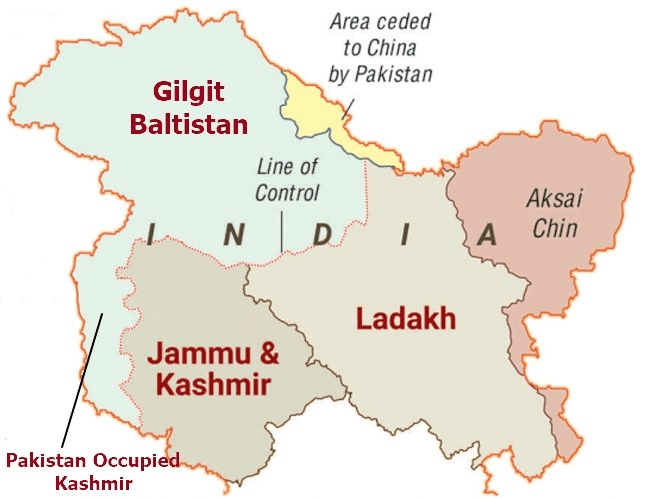
While China’s soft power strategy initially emphasized peaceful intentions and non-interference in other nations’ sovereignty, its actions have increasingly contradicted these claims. Aggressive territorial disputes with Taiwan, India (Ladakh), Bhutan, the Philippines, and others, coupled with debt-trap diplomacy, have significantly eroded global trust in China’s intentions. The lack of transparency and heavy censorship of information have further undermined the credibility of China’s “peaceful rise” narrative.
The COVID-19 pandemic intensified global skepticism of China, as many countries alleged its role in the virus’s origin and spread. Today, China’s soft power is on the decline, as its actions are increasingly perceived as threats to global stability rather than contributions to peaceful development.
India Soft Power strategy – Vasudhaiva Kutumbakam
‘Vasudhaiva Kutumbakam’ concept originates in the Vedic scripture Maha Upanishad (Chapter 6, Verse 72)
“Vasudhaiva Kutumbakam” – “The world is a family” – is an ancient Indian philosophical idea that transcends boundaries of culture, religion, and nationality.
Over 5,000 years ago, when the West was still evolving from hunter-gatherer societies, India had already embraced the profound philosophy of ‘Vasudhaiva Kutumbakam’- a liberating idea that emphasizes interconnectedness, peace, and harmony among all living beings. This philosophy reflects India’s historical role as a responsible civilization, one that has never threatened another nation’s sovereignty. Instead, India has consistently extended humanitarian aid and support to its smaller neighbors, fostering goodwill and cooperation.
As one of the world’s oldest civilizations, over 5,000 years old, India has a rich history, with evidence of its advanced past, such as the impressive urban planning and drainage systems of the Indus Valley Civilization and recent discoveries in Sinauli, Uttar Pradesh, where copper artifacts and chariots from thousands of years ago were found.
Despite this rich heritage, India has often been unfairly stereotyped in the West as a poor, overpopulated, and underdeveloped nation, with little respect afforded to its people. One reason for this perception is the lack of collective pride among Indians themselves in their history and civilization. Without this national pride, India’s vast population struggles to fully harness its potential as a global influence through soft power.
However, with the rise of a nationalist government in 2014, India’s soft power strategy took a new direction. The country’s image has significantly improved in international media and on the global stage, with a renewed focus on showcasing its cultural, historical, and philosophical contributions to humanity.
Vaccine Diplomacy
During the COVID-19 pandemic, while many Western nations prioritized stockpiling vaccines and showed limited interest in sharing with poorer countries, India took a different path, embodying its humanitarian values. India not only developed its own affordable COVID-19 vaccines but also launched the “Vaccine Maitri” (Vaccine Friendship) initiative, providing free vaccines to nations in need as a gesture of global solidarity.
Indian medicines and vaccines, known for their affordability compared to Western alternatives, became a lifeline for many underprivileged countries. While Western pharmaceutical corporations competed for profits, India chose humanity over commerce.
India successfully vaccinated its entire population and supplied vaccines to over 100 countries worldwide, showcasing its dedication to being a responsible global partner.
You can find the detailed data on India’s vaccine distribution in the Ministry of External Affairs report: India’s Vaccine Supply.
This effort solidified India’s image as a responsible and compassionate nation on the world stage.
Yoga as Soft Power
In 2014, at the United Nations General Assembly, the Government of India proposed declaring June 21st as International Yoga Day. The proposal was adopted, and on December 11, 2014, the UN officially declared the date as International Yoga Day. This move illustrates the effective use of India’s soft power to promote its culture and heritage for the well-being of the global community. By celebrating Yoga Day, people worldwide will recognize the origins of yoga and its historical and cultural significance, busting the narrative that India was always a poor, hunter-gatherer civilization.
Yoga is an ancient practice, thousands of years old, renowned for its profound benefits to both physical and mental health. Evidence of yoga’s roots can be traced back to the Indus-Saraswati Valley Civilization, where seals and fossils depicting yogic poses have been uncovered. Yoga provides numerous advantages, including improved strength, posture, flexibility, relief from back pain, better heart health, increased energy, and enhanced moods
Discover the origins and historical development of yoga through images of Indus-Saraswati seals: Yoga: Its Origin, History, and Development.

The Ministry of Ayush has established the Yoga Certification Board to enhance India’s soft power and create opportunities for both Indian and international students to obtain recognized yoga certifications. This initiative aims to tap into the growing global yoga industry, which is worth billions of dollars, and provide a pathway for individuals to pursue careers in yoga, thereby contributing to the global promotion of Indian culture and wellness practices.
India’s UPI Digital Payment Systems
India’s National Payments Corporation of India (NPCI) developed the Unified Payments Interface (UPI), which facilitates digital transactions using QR codes and mobile numbers. UPI has seen remarkable growth, increasing from ₹2.07 crore in FY 2017-2018 to ₹18,737 crore in FY 2022-2023, with a Compound Annual Growth Rate (CAGR) of 44%. For more details, refer to the report here: PIB Report.
The cost-effectiveness and seamless payment experience offered by UPI have attracted global attention, leading several countries to adopt India’s payment system in various forms. Countries such as France, UAE, Saudi Arabia, Singapore, Maldives, Bhutan, Oman, and Bahrain have integrated UPI-based systems to enhance their own digital payment infrastructures.
At the recent BRICS summit, the Government of India emphasized the promotion of UPI (Unified Payments Interface) to provide a low-cost, efficient alternative to traditional financial systems, which could reduce reliance on the dollar and Western-dominated financial institutions. Prime Minister Modi, during his visit to Russia, further highlighted the need for diversifying payment systems to foster economic independence and enhance the financial sovereignty of emerging economies. This aligns with India’s broader efforts to provide alternative financial solutions and strengthen ties within the BRICS bloc.
India’s Role in the Global South
India actively supports developing countries in Africa, Latin America, and Asia, addressing their challenges and advocating for their needs in international forums such as the G20 and the United Nations. To help Africa meet its energy demands, India is assisting with the development of low-cost solar energy projects through initiatives like the International Solar Alliance.
India has also prioritized ensuring food security, promoting sustainable development, and making healthcare more affordable for Global South countries. Additionally, it shares knowledge on sustainable farming techniques to improve agricultural practices. By understanding the specific needs of these nations, India has proposed and discussed solutions in global platforms, recognizing that the Global South represents over 60% of the world’s population.
In a recent virtual summit held in August, 123 countries gathered to address challenges and explore solutions for the Global South. India made notable contributions, including a USD 2.5 million fund to support trade promotion activities aimed at boosting exports, creating jobs, and driving economic growth. Additionally, India pledged a USD 1 million fund to build capacity in trade policy and negotiations by training government officials from Global South countries to develop effective trade strategies and negotiate agreements that serve their national interests.
Global South countries view India as a trusted partner, inspired by its philosophy of Vasudhaiva Kutumbakam (“the world is one family”). India is committed to helping poorer nations by providing humanitarian assistance and developmental support with no intention of exploiting or harming their sovereignty.
Cinema and Indian Cuisine
India, with the world’s largest vegetarian population, stands out as the only country to have mastered the art of creating high-quality vegetarian cuisine, offering a culinary richness that aligns seamlessly with the rise of veganism in Western countries. Indian cuisine, with its vast variety ranging from North to South and East to West, offers a rich cultural experience that can be promoted globally.
Indian cuisine, including its renowned vegetarian options, can serve as a powerful tool of soft power by providing subsidies to Indian restaurants abroad and supporting existing establishments to expand worldwide. With a significantly smaller carbon footprint compared to other nations, India’s food culture is an ideal ambassador for sustainability.
While the United States uses Hollywood to project its influence, India can use Bollywood, Tollywood, and other regional film industries to share its rich culture, history, and civilization. TV shows like Ramayana and Mahabharata, movies like Baahubali etc. can be powerful tools to spread India’s story globally, educate the world about its heritage, and correct misunderstandings. By using these platforms, India can build a more accurate global image, promote its values, and strengthen its soft power.
Promote Indian Spiritual Tourism, History, Art, Culture & Architecture
India can promote spiritual tourism and various Ayurvedic therapies globally to enhance awareness of inner consciousness, mental well-being, and physical health.
Additionally, India can showcase its rich history and architectural marvels, such as Hampi, the Taj Mahal, the palaces of Rajasthan, and the heritage of Udaipur. By highlighting its traditional arts, handloom sarees, and vibrant cultural heritage, India can inspire global appreciation for its literature, art, and history. These efforts would serve as a powerful tool of soft power, fostering a positive image of India on the world stage.
Challenges to India’s Soft Power
While India has significant potential to enhance its soft power, there are certain challenges that hinder its influence. Stay tuned for our upcoming article, where we’ll dive deeper into these challenges and explore their implications.
Conclusion
To maintain peace and harmony in a unipolar world, there is a growing need for a multipolar world where power is distributed among multiple responsible states. India plays a key role in this shift, as it is a responsible power with no intention of interfering with the territorial integrity of any other country.
As the world’s largest democracy and a secular nation, India is home to diverse languages, cultures, cuisines, and religions, all coexisting harmoniously with the environment and promoting sustainable development.
India imagines a world where everyone lives in peace and harmony, focusing on their inner growth. While India’s soft power is significant, it understands the necessity of developing hard power as well. Soft power alone cannot influence the global order, especially when other hard powers are determined to maintain global dominance. India’s vision of “One World, One Family” is grounded in its rich spiritual heritage, principles of non-violence, and multiculturalism. These values can help India expand its soft power and influence other nations to adopt similar principles, positioning India to emerge as a superpower in the future.
*************************************************************
Thank you all for your support. I’m putting in the effort to do my research and share my opinions, and I would appreciate it if you could support my work by sharing it on social media.
This is my honest opinion, and if you feel that I’ve made any mistakes in my analysis, please feel free to share your thoughts in the comments. I’ll gladly work on improving it.


 Indus Diplomacy
Leave a comment