If you ask me, before 2014, nobody could have imagined that the Kumbh Mela would emerge as a soft power strategy to highlight India’s rich cultural heritage on the global stage. Before 2014, the perception of the Kumbh Mela was vastly different. A false narrative sought to blame the festival for river pollution and dismissed it as a gathering of illiterate people. During that time, criticizing one’s own country was often seen as intellectual, with little regard for the significance of our identity, cultural heritage, and the historical importance of festivals like the Kumbh Mela.
However, times have changed. There has been a resurgence of nationalism and a renewed pride in India’s culture and history. Today, Indus Diplomacy will explore the significance of the Kumbh Mela through the lens of diplomacy and its role as a symbol of India’s soft power.
Kumbh Mela: The World’s Largest Gathering of Devotees
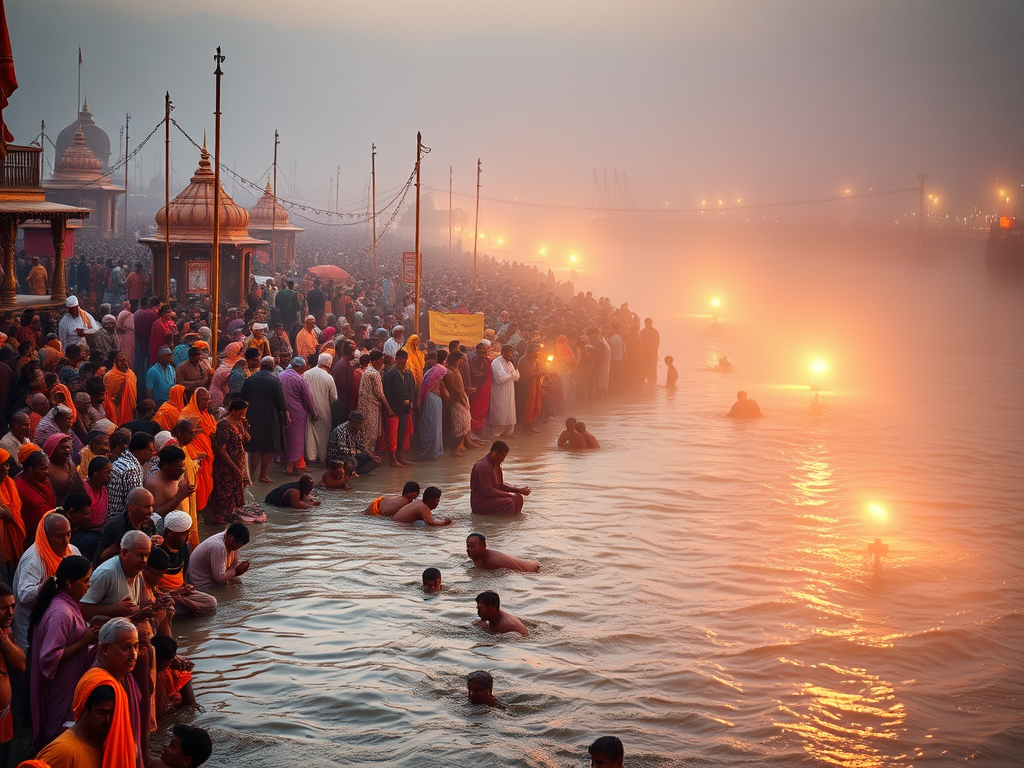
Kumbh Mela is the world’s largest gathering of devotees, Sadhus, Naga Sadhus, and spiritual seekers from all over India and across the globe. Around 40 crore devotees are expected to attend the 2025 Kumbh Mela to embark on their spiritual journey and take a holy dip in the Ganga between 13th January and 26th February 2025.
What’s the Story Behind the Kumbh Mela?
According to the Rig Veda, the Samudra Manthan (churning of the ocean) was carried out by the Asuras (demons) and Devas (demigods), which led to the emergence of Amrit (the elixir of immortality). A fierce battle broke out between the Asuras and Devas to claim Amrit. During the struggle, Indra’s son accidentally spilled a few drops of Amrit at four sacred locations: Prayagraj at the Triveni Sangam (where the Ganga, Yamuna, and Saraswati meet), Nashik on the banks of the Godavari River, Haridwar along the Ganga River, and Ujjain on the Shipra River. These places became holy sites where the Kumbh Mela is held every three years as part of a 12-year cycle across these locations. The Purna Kumbh Mela occurs once every 12 years in Prayagraj, while the Ardh Kumbh Mela is celebrated every three years at these sites. The most recent Purna Kumbh Mela was held in 2013.
Why Do Devotees and Saints Gather at Kumbh Mela?
For thousands of years, Kumbh Mela has drawn devotees, Sadhus, and ascetics. The first written evidence of the Kumbh Mela appears in the travelogues of the Chinese traveler Xuanzang, who visited India in the 7th century, describing Prayagraj as a region of immense natural beauty, prosperity, and cultural depth.
Devotees attend the Kumbh Mela to take a sacred dip in the Triveni Sangam, where the three rivers—Ganga, Yamuna, and the lost Saraswati—meet. This act is believed to purify the soul, liberating it from the cycle of rebirth and helping one attain moksha (the highest level in the spiritual journey).
The following are the most auspicious days to take a holy dip in the Triveni Sangam of the Ganga River during the 2025 Kumbh Mela in Prayagraj:
- Paush Purnima: 13th January 2025 (Monday)
- Makar Sankranti: 14th January 2025 (Tuesday)
- Mauni Amavasya: 29th January 2025 (Wednesday)
- Basant Panchami: 3rd February 2025 (Monday)
- Maghi Purnima: 12th February 2025 (Wednesday)
- Mahashivratri: 26th February 2025 (Wednesday)
Each of these dates holds significant spiritual importance and attracts millions of devotees seeking blessings and liberation.
For more information about the Kumbh Mela, please visit the official website: https://kumbh.gov.in/
What’s the Buzz Around the 2025 Maha Kumbh Mela?
An estimated 40 crore devotees are expected to participate in the Kumbh Mela 2025, and the Uttar Pradesh government is projected to generate Rs. 25,000 crore in revenue from the event. To ensure the smooth functioning of the Kumbh Mela, extensive preparations have been made, including the installation of 1.5 lakh toilets, the construction of 12 km of temporary ghats, 8 km of riverfront roads, 1.5 lakh tents, 69,000 solar and LED lights, 2,750 CCTV cameras, and much more.
India’s Soft Power and Diplomacy through Kumbh Mela
The Kumbh Mela gained global recognition in 2017 when UNESCO included it in the list of Intangible Cultural Heritage of Humanity. The UN agency acknowledged the Kumbh Mela for encapsulating the sciences of astronomy, astrology, spirituality, ritualistic traditions, and social and cultural practices, making it an immense source of knowledge.
This recognition has helped project India’s image as a land of rich cultural, historical, and spiritual heritage. India stands out as the only country in the world that successfully integrates multiculturalism, allowing people of different philosophies and ideologies to freely practice their spiritual journeys.
Global media has extensively covered the Kumbh Mela, bringing its significance to international audiences. For instance, France24 highlighted the importance of this grand event in an article: India’s Kumbh Mela: World’s Largest Religious Gathering.
Notably, Laurene Powell, wife of Apple co-founder Steve Jobs, is set to visit the Maha Kumbh Mela, as reported by NDTV: Apple Co-founder Steve Jobs’ Wife Laurene Powell to Visit Maha Kumbh Mela.
These developments are bringing global attention to the Kumbh Mela, allowing millions of people worldwide to appreciate India’s profound cultural heritage. These initiatives challenge outdated stereotypes of India as a poor, underdeveloped nation, instead highlighting its wealth in culture, spirituality, agriculture, science, astronomy, and space exploration.
Key Initiatives at Maha Kumbh Mela 2025
- Netra Fair: This event will conduct 5 lakh eye tests and distribute 3 lakh spectacles to those in need.
- Cultural Performances: Renowned artists such as Shankar Mahadevan, Mohit Chauhan, and Kailash Kher have been invited by UP Tourism to perform at the Mela.
- International Promotion: To position Uttar Pradesh as a premier global tourism destination, the state government is showcasing Maha Kumbh 2025 at international tourism trade fairs in Madrid, Spain, and Berlin, Germany.
Eminent global leaders from countries like Israel, the US, France, and Vietnam have shown interest in attending the Maha Kumbh Mela to witness this extraordinary congregation of faith. According to The Times of India, international dignitaries are also eager to meet CM Yogi Adityanath, showcasing the growing global interest in India’s leadership: Maha Kumbh 2025: Global Dignitaries to Attend Spectacular Ganga Aarti.
India’s Growing Soft Power
India is increasingly using its cultural heritage, like the Kumbh Mela, to enhance its soft power and build diplomatic ties with other nations. In the past, a lack of pride in its own traditions allowed a negative narrative to dominate, portraying India as a poor and unlivable country. However, with a renewed focus on its sustainable and inclusive philosophies, like Vasudhaiva Kutumbakam (the world is one family), India is reshaping its global image.
The Kumbh Mela represents the pinnacle of India’s soft power, promoting social harmony, sustainability, spiritual awakening, and a deeper understanding of humanity. It provides a platform for meditation, yoga, chanting, and holistic detoxification of both body and soul, showcasing India’s unique contribution to global well-being and unity.
Learn more about India’s Soft Power Strategy by visiting: https://indusdiplomacy.in/2024/12/24/vasudhaiva-kutumbakam-indias-soft-power-strategy-for-superpower-status/
___________________________________________________________________
Thank you all for your support. I’m putting in the effort to do my research and share my opinions, and I would appreciate it if you could support my work by sharing it on social media.
This is my honest opinion, and if you feel that I’ve made any mistakes in my analysis, please feel free to share your thoughts in the comments. I’ll gladly work on improving it.
References:
- “Xuanzang’s Account of Kumbh Mela,” PIB Press Release. Available at: PIB Website.
- UNESCO Intangible Cultural Heritage of Humanity: https://ich.unesco.org/en/RL/kumbh-mela-01258


 Indus Diplomacy
Leave a comment