Disclaimer: The views and insights expressed in this article are personal opinions. Sources for the data points cited are provided below. The images included are intended solely for educational and reference purposes.
To understand the richness of Indian textiles, we must trace their origins to one of the world’s earliest civilizations—the Indus Valley Civilization, which thrived around 2500 BCE in the regions of modern-day India, Pakistan, and Afghanistan. Archaeological findings reveal that the people of this civilization possessed tools for spinning and weaving, showcasing their advanced textile-making skills. Evidence suggests that they primarily used natural fibers such as cotton, which were readily available in the region. Additionally, the discovery of dyed cotton threads indicates a remarkable level of expertise in dyeing techniques.
As Indian society evolved, so did its textile traditions. During later periods, such as the Vedic period, weaving techniques became more sophisticated. Ancient scriptures like the Rigveda and Mahabharata reference various types of textiles and garments, highlighting the use of luxurious materials such as silk among the upper echelons of society. These texts underscore the cultural significance of textiles in India’s history.
The Global Presence of India’s Handloom Industry
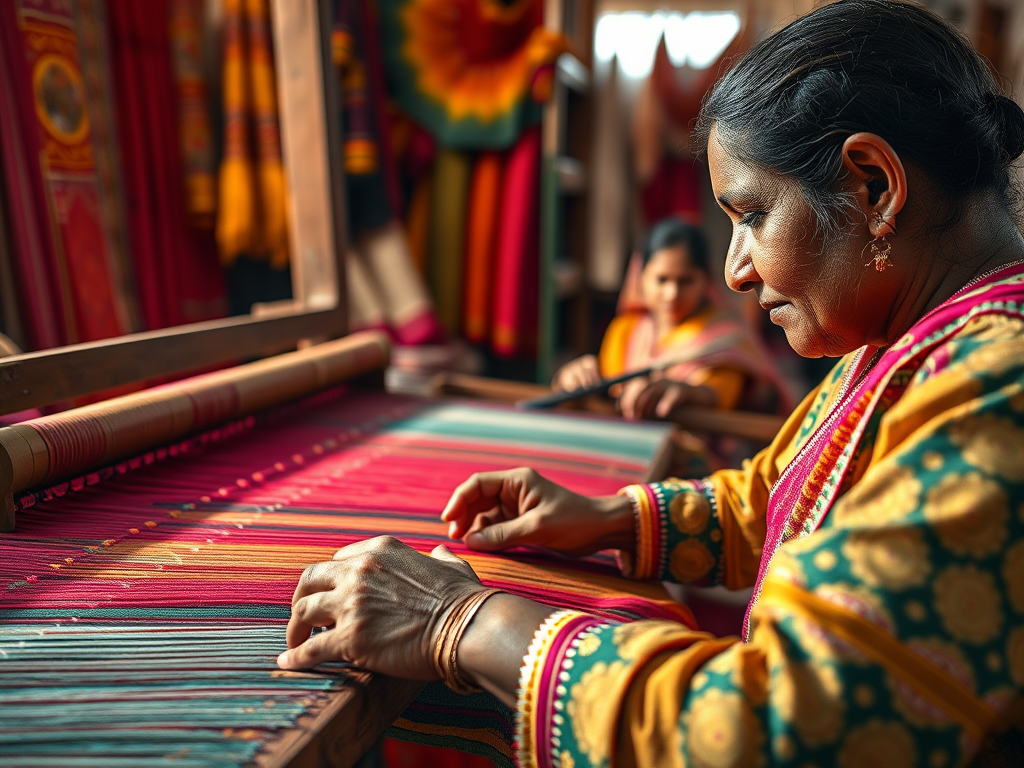
The handloom industry in India stands as one of the nation’s oldest and most significant cottage industries, boasting a history that spans thousands of years and vividly reflects India’s rich cultural heritage. Historically, this industry flourished across every state, with each region offering its own distinct handloom products. Renowned for its diversity and exquisite craftsmanship, the Indian handloom sector continues to enjoy strong demand both domestically and internationally, celebrated for its intricate designs and unparalleled artistry.
India’s handloom sector is a unique industry that requires minimal capital investment, uses environmentally friendly materials, consumes very little power, and is highly flexible in adapting to market changes. This makes it not only sustainable but also a vital part of the country’s economy. According to the Handloom Census of 2019-20, the industry provides livelihoods to nearly 35 lakh workers, making it one of the largest cottage industries in India. It is also an important source of employment for women, who make up about 72% of the total workforce. This highlights the handloom sector’s role in empowering women and supporting rural communities across the country.
India exports handloom products to over 20 countries, with the USA being the largest importer. In 2022-23, the USA imported handloom goods worth US$ 58.12 million, accounting for 32.1% of India’s total handloom exports. The UAE followed as the second-largest importer with US$ 12.72 million (7.1%), while Spain stood third at 6.9%.
Other major importing countries include the UK, Italy, France, Germany, Australia, Netherlands, and Greece. Collectively, these nations contribute significantly to India’s handloom export market. Additionally, countries like South Africa, Japan, Sweden, Canada, Portugal, Brazil, Malaysia, Belgium, Singapore, and Russia accounted for around 14% of India’s handloom exports in 2022-23.
India is a leading exporter of handloom products, known for its diverse range of offerings. Some of the most commonly exported handloom items include mats, mattings, carpets, rugs, bedsheets, cushion covers, and other handcrafted textiles.
- Mats and Mattings: In 2020-21, mats and mattings accounted for 29% of India’s total handloom exports.
- Carpets, Rugs, and Mats: These products held a 13.6% share, valued at ₹224.4 crore (US$ 28 million) during the same period.
- Cotton Durries: Exports reached ₹104.53 crore (US$ 13 million) in 2020-21.
- Indian Silk Scarves: Renowned globally, silk scarves represented a significant portion of exports, valued at ₹61.5 crore (US$ 7.7 million) in 2020-21.
- Linen Products: Items such as bed linen, table linen, kitchen linen, and pillowcases formed about 23.5% of the export share during the same year.
Why is Western Attire so Dominant in India?
As Indians, we have been exposed to Indian attires since childhood and yet we dress in these attires only on special occasions like festivals, weddings, etc. This can be attributed to multiple factors related to the history of India.
- Colonial Influence
Historically, Indian clothing varied based on multiple factors like region and climate. It was very common for people of all social classes to wear dhotis, Sarees, Turbans, Angarkhas, etc. The clothing patterns and materials were defined by the local geography, climatic conditions, social norms. These were custom to individual states and would sometimes even vary between cities.
The Britishers ruled over India for about 200 years and during this period, Indian society was introduced to Western culture. Indians were introduced to a new lifestyle overall which they had never witnessed before. A major part of any culture is the textile that is used to make the clothes and while the Britishers introduced Indians to their culture, they imposed their clothing for all government offices, schools and courts. As a result, Indians working directly with or under Britishers began adopting their clothing and style to appear more “civilized” in their eyes.
Thomas Macaulay’s “Minute on Indian Education” Highlights the importance of introducing the Indian elites to English education. This would help the Britishers in influencing the mass population of the country as these English-educated elites would act as intermediaries between the British and the Indians. Slowly but surely, these elite members of the society adopted Western attire as a symbol of progress and intellect.
As a result of these changes, By the late 19th and early 20th centuries, Western clothing had become a status symbol among the upper classes and urban populations.
- Practicality and Convenience
Historically, Indian clothes were adapted based on the region and its hot and humid climate. Items like dhotis, lungis, sarees were made from lightweight cotton or silk. Men wore loose angarkhas and turbans which provided them ample ventilation making these clothes great for the climate. These outfits were practical for predominantly agricultural based society which require agility and breathability from their clothing.
After Britishers colonised India, there was a rise in factories, offices, bureaucratic jobs etc. These were primarily jobs that did not require high mobility and traditional clothing was seen as “impractical”. With western clothes like shirts, trousers, suits became the norm they were seen as “efficient” and “professional”. In the 20th century, women in urban areas began shifting towards more manageable clothing like salwar kameez or Western dresses, as sarees required more effort to drape and maintain.
- Media and Pop Culture
When we take a look at early bollywood movies, they usually feature traditional attires like sarees, kurtas-pajamas, etc. Movies like Mughal-e-Azam showcased Indian attire beautifully and reinforced the Indian cultural identity.
During the late 1980s to 2000s, Indian audiences were introduced to Hollywood shows and movies which showcased both casual and formal Western attire influencing the then youth of India. Early 2000s bollywood movies also began showcasing their young, urban and modern characters in casual western attires making it an aspirational fashion statement for all. Today, due to the introduction of Social media and fast fashion Indian youth is highly influenced to purchase western clothing items at affordable rates.
Textile as a Tool for Soft Power
To understand how textiles can serve as a tool for soft power, we can examine the strategic approach taken by France. Globally recognized for its dominance in fashion, textiles, and luxury goods, France has established itself as the benchmark for quality and craftsmanship. This influence extends beyond culture, contributing significantly to the economy through GDP growth, exports, job creation, and tourism while also providing leverage in international trade negotiations.
Unlike countries such as China and Bangladesh, which focus on mass-market textiles, France specializes in high-value, luxury textiles. The French fashion and textile industry directly and indirectly employs nearly one million people. In 2022, France’s textile and fashion exports amounted to €37 billion, with major buyers including China, the United States, Japan, and the Middle East. Iconic textile products such as Lyon silk, Calais and Alençon lace, haute couture embroidery from Parisian ateliers, and high-end leather goods play a crucial role in this industry.
The French textile and fashion sector contributes approximately €150 billion ($160 billion) annually to the country’s economy. Leading luxury brands like Louis Vuitton, Chanel, Hermès, and Dior generate tens of billions of euros in revenue. LVMH (Louis Vuitton Moët Hennessy), the world’s largest luxury conglomerate, reported €86.2 billion in revenue in 2023, with a significant share derived from textiles, apparel, and leather goods. By positioning luxury fashion as a high-value sector, France maintains a strong trade surplus in premium consumer goods.
France actively leverages its leadership in luxury textiles during trade negotiations with China, the US, and the European Union. French policymakers advocate for reduced tariffs on high-end exports, ensuring continued access to key markets. For instance, France has lobbied within the EU to secure favorable trade terms with China, minimizing restrictions on luxury textile exports such as silk and leather goods.
How Can India Improve Its Textile Soft Power?
We are at a crucial moment where India’s rich heritage of handloom textiles coexists with the widespread adoption of Western clothing. This presents a unique opportunity to reposition Indian handloom as a luxury product, rather than limiting it to traditional or ethnic wear. To achieve this, several strategic steps must be taken:
Positioning Handloom as Luxury, Not Just Ethnic Wear
Indian handloom textiles, such as Banarasi, Kanjeevaram, Pashmina, Jamdani, and Chanderi, are globally admired for their craftsmanship. However, they are often perceived as ethnic or occasion-specific attire, restricting their appeal in high-fashion markets.
What can be done?
- Rebrand handloom textiles as exclusive, artisanal, and premium, similar to how French brands position their textiles.
- Create limited-edition collections with premium pricing, marketed as collector’s items rather than just fabric.
- Market handloom sarees like luxury scarves, Handloom silk should be positioned as heirloom fashion, not just wedding wear.
- Develop high-end handloom fashion beyond sarees. Items like dresses, scarves, jackets, and couture pieces should be designed for a global audience.
Integration with Global Fashion
French luxury brands like Chanel, Dior, and Louis Vuitton integrate French textiles into global high fashion, making them highly desirable. Indian handlooms have the potential to do the same.
What can be done?
- Indian designers like Sabyasachi, Rahul Mishra, and Manish Malhotra should showcase handloom-based couture at Paris Fashion Week, Milan Fashion Week, and New York Fashion Week.
- Partner with celebrities and influencers to wear handloom-based high fashion on global red carpets, magazine covers, and fashion events.
- Position handloom as a sustainable, eco-friendly alternative to mass-produced fabrics, attracting ethical fashion consumers.
Better Government Trade Support
France actively negotiates favorable trade deals for its luxury fashion brands, ensuring low tariffs and smooth exports. India must do the same for handloom textiles.
What can be done?
- Push for duty-free status for Indian handloom exports to Europe and the US, similar to how French luxury brands enjoy low tariffs.
- Secure Geographical Indication (GI) protections internationally to prevent copycat production in other countries.
- Establish export hubs and dedicated global handloom stores in fashion capitals like Paris, New York, and Milan.
- Provide financial incentives and subsidies to encourage artisans to produce export-quality handlooms.
Tech & Modernization for Scalability
France has seamlessly blended traditional craftsmanship with modern technology to scale its luxury brands. India’s handloom sector needs to follow suit.
What can be done?
- Use AI-driven design tools to help weavers create modern patterns while preserving traditional techniques.
- Introduce blockchain-based textile authentication to prove the originality and exclusivity of each handloom piece.
- Expand e-commerce platforms where premium buyers can purchase handloom fabrics directly from artisans.
Tourism & Cultural Integration
Luxury fashion and cultural tourism go hand in hand. France has integrated fashion into its tourism industry, attracting millions of visitors to events like Paris Fashion Week and luxury brand flagship stores. India must do the same with handlooms.
What can be done?
- Establish Handloom Museums & Experience Centers in cities like Varanasi, Kanchipuram, and Kashmir, where visitors can witness traditional weaving.
- Organize high-end handloom fashion shows in major cities, targeting luxury buyers.
- Develop curated heritage tours that include visits to handloom hubs, allowing tourists to interact with artisans and purchase exclusive pieces.
- Encourage luxury hotels and resorts to showcase and sell premium handloom products to elite travelers.
Indian Handloom Directory
India is a very diverse country with the textiles and their styles changing by region. Here is a list of special textiles from each state. Feel free to add any other I may have missed in the comments.
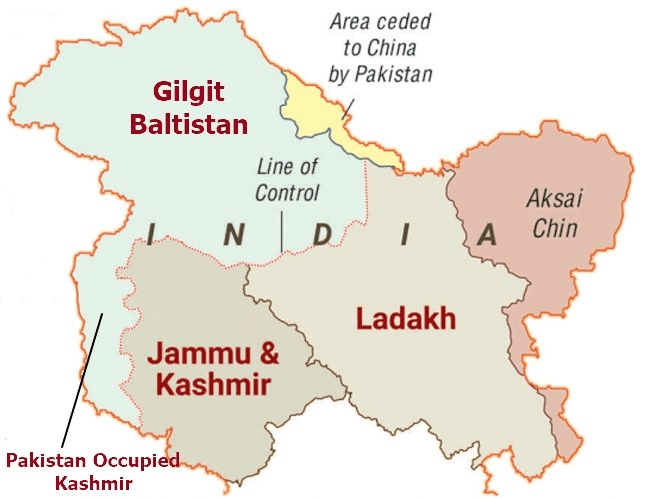
Jammu & Kashmir: Pashmina Shawl
Speciality: Fine cashmere wool, handwoven, luxurious warmth

Himachal Pradesh: Kullu & Kinnauri Shawls
Speciality: Geometric patterns, vibrant colors, wool-based

Punjab: Phulkari
Speciality: Embroidery on handwoven khaddar fabric, intricate floral motifs

Haryana: Panipat Dhurries
Speciality: Handwoven cotton rugs with geometric and floral patterns

Uttarakhand: Pichora
Speciality: Hand block printed or embroidered dupatta on cotton or silk

Rajasthan: Bagru & Sanganeri Block Prints
Speciality: Hand-printed cotton fabric using natural dyes

Uttar Pradesh : Banarasi Silk Saree
Speciality: Zari brocade work, gold and silver threads, Mughal-era motifs

Madhya Pradesh : Chanderi Silk Sarees
Speciality : Silk, lightweight, intricate gold borders

Chhattisgarh : Kosa Silk
Speciality: Tussar silk variant, rich texture, natural golden hue

Maharashtra : Paithani Saree
Speciality : Handwoven silk, peacock and floral motifs, real gold and silver zari

Gujarat : Patola Saree
Speciality : Double Ikat weaving technique, geometric patterns, high precision

Goa : Kunbi Saree
Speciality : Traditional red-and-white cotton saree worn by tribal women

West Bengal : Baluchari Saree
Speciality : Mythological motifs woven into silk, intricate craftsmanship

Odisha : Sambalpuri Ikat Saree
Speciality : Tie-dye resist technique, vibrant and bold patterns

Jharkhand : Tussar Silk
Speciality : Wild silk variety, rich texture, golden sheen

Bihar : Bhagalpuri Silk
Speciality : Soft, lightweight Tussar silk with natural shine

Assam : Muga Silk
Speciality : Exclusive golden silk, durable and naturally glossy

Meghalaya : Eri Silk (Ahimsa Silk)
Speciality: Soft, warm, sustainable, non-violent silk production

Tripura : Risa & Rignai
Speciality : Handwoven tribal textiles, worn as shawls and wraparounds

Manipur : Phanek & Moirang Phee
Speciality : Handwoven traditional wrap skirts with temple motifs

Nagaland : Naga Shawls
Speciality : Woolen shawls with bold tribal patterns, red-black-white combinations

Arunachal Pradesh : Apatani Weaving
Speciality : Cotton handloom fabrics with geometric motifs

Mizoram : Puan
Speciality : Handwoven wrap skirts with intricate stripe patterns

Sikkim : Lepcha Weaving
Speciality : Handwoven cotton, soft pastel colors, sustainable textile

Tamil Nadu : Kanjeevaram Silk Saree
Speciality : Heavy silk, vibrant colors, temple borders, pure zari work

Karnataka : Mysore Silk
Speciality : Pure silk with a smooth finish, minimal yet elegant zari borders

Kerala : Kasavu Saree
Speciality : Off-white cotton with pure gold zari borders, worn during festivals

Andhra Pradesh : Mangalagiri Cotton
Speciality : elegant and simple with no designs on body, soft, lightweight, and ideal for summers

Telangana : Gadwal Saree
Speciality : Cotton-silk blend, contrast borders, lightweight yet rich look

References:

 Indus Diplomacy
Leave a comment